Thomas Zurbuchen receives the Prix Suisse 2026
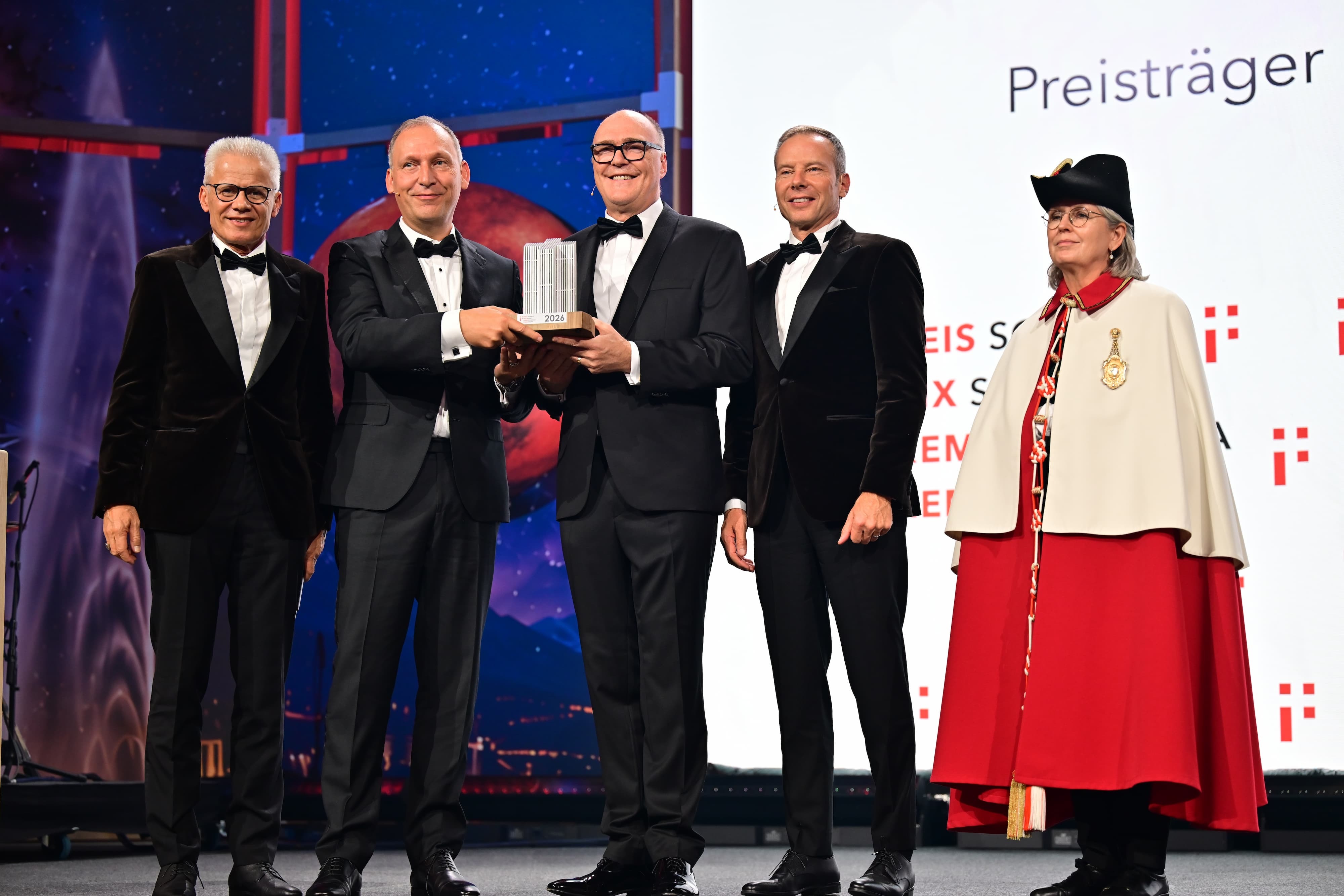
Professor Thomas H. Zurbuchen has received the Prix Suisse 2026 for his outstanding contributions to science and international space exploration. Federal Councillor Martin Pfister delivered the tribute and presented the award to the astrophysicist, former NASA science chief and head of ETH Zurich Space at the Kursaal Bern.
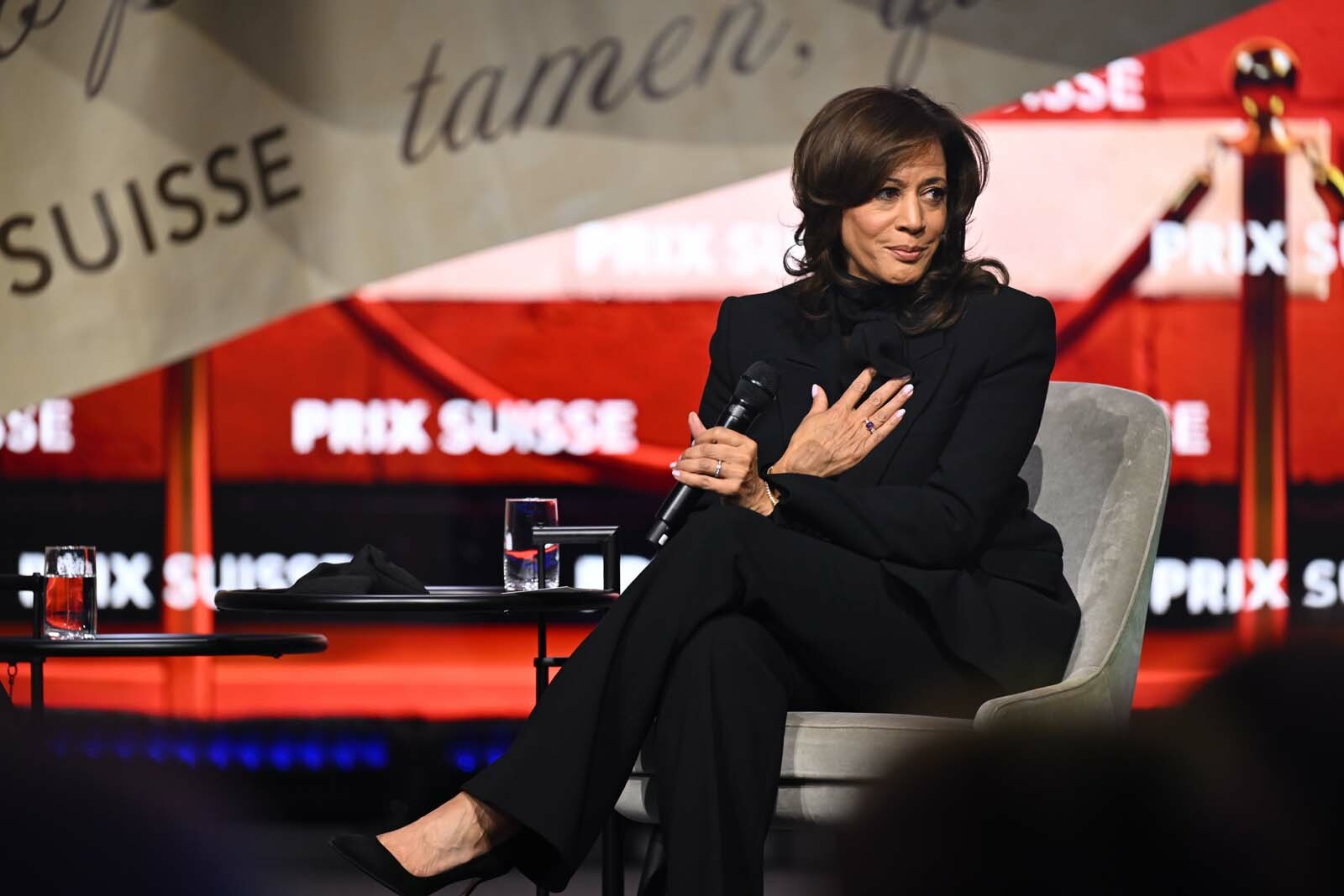
Kamala D. Harris, former Vice President of the United States, offered her perspective on the political landscape just four days after the US midterm elections. In a fireside chat with Sandra Studer, she discussed democracy, polarisation, trust and what holds societies together.
“We are the Switzerland of today. We are building the Switzerland of tomorrow.” Under this theme, the gala brought together Swiss vocational education, the arts, fine dining and space exploration. The evening highlighted how learning, skill, courage and innovation can shape the country’s future.
From the Bernese Oberland to the leadership of NASA’s science programme, Professor Thomas H. Zurbuchen has built a career that has taken him far beyond his native Switzerland. On Saturday evening at the Kursaal Bern, he received the Prix Suisse 2026 for his outstanding achievements in science and space exploration. Federal Councillor Martin Pfister delivered the tribute.
Zurbuchen grew up in Heiligenschwendi in the Bernese Oberland. From 2016 to 2022, he served as NASA’s Associate Administrator for the Science Mission Directorate, the first Swiss national to hold the post. He oversaw a budget of up to US$8 billion and around 130 missions and projects. These included the James Webb Space Telescope, the Mars Perseverance rover and its Ingenuity helicopter, and DART, the first mission to successfully alter an asteroid’s orbit. In 2023, Zurbuchen returned to Switzerland, where he established ETH Zurich Space and launched the country’s first master’s degree programme in space science and technology. In 2027, he will take up a new role as Senior Vice President at Blue Origin.
“Thomas Zurbuchen embodies a Switzerland that stays curious, pushes boundaries and takes responsibility. His journey from the Bernese Oberland to the leadership of NASA’s science programme shows what people can achieve when education, skill and courage come together. He combines scientific excellence with a gift for inspiring others to pursue ambitious goals. It is a great honour for us to present him with the Prix Suisse 2026,” says Stefan Linder, head of Initiative Schweiz.
Kamala D. Harris on democracy and social cohesion in times of change
A further highlight of the evening was a fireside chat with Kamala D. Harris. Speaking with moderator Sandra Studer, the former US Vice President discussed political developments in the United States and the challenges facing democratic societies. Their conversation explored polarisation, public trust, what holds communities together and how democracies can continue to act effectively in uncertain times.
The timing gave the conversation particular relevance. Just four days after the US midterm elections, Harris discussed what the results meant for the United States and the international community. She also offered an outside perspective on Switzerland, reflecting on how stability, education and social cohesion help a society weather uncertainty.
Vocational education as a first choice
The gala also highlighted Switzerland’s dual vocational education system. Around two thirds of young people in Switzerland begin an apprenticeship after completing compulsory schooling. They combine on-the-job training with classes at a vocational school, take on responsibility early in their careers and can go on to higher education. This pathway trains the skilled professionals on whom industry, the trades, healthcare and the service sector depend.
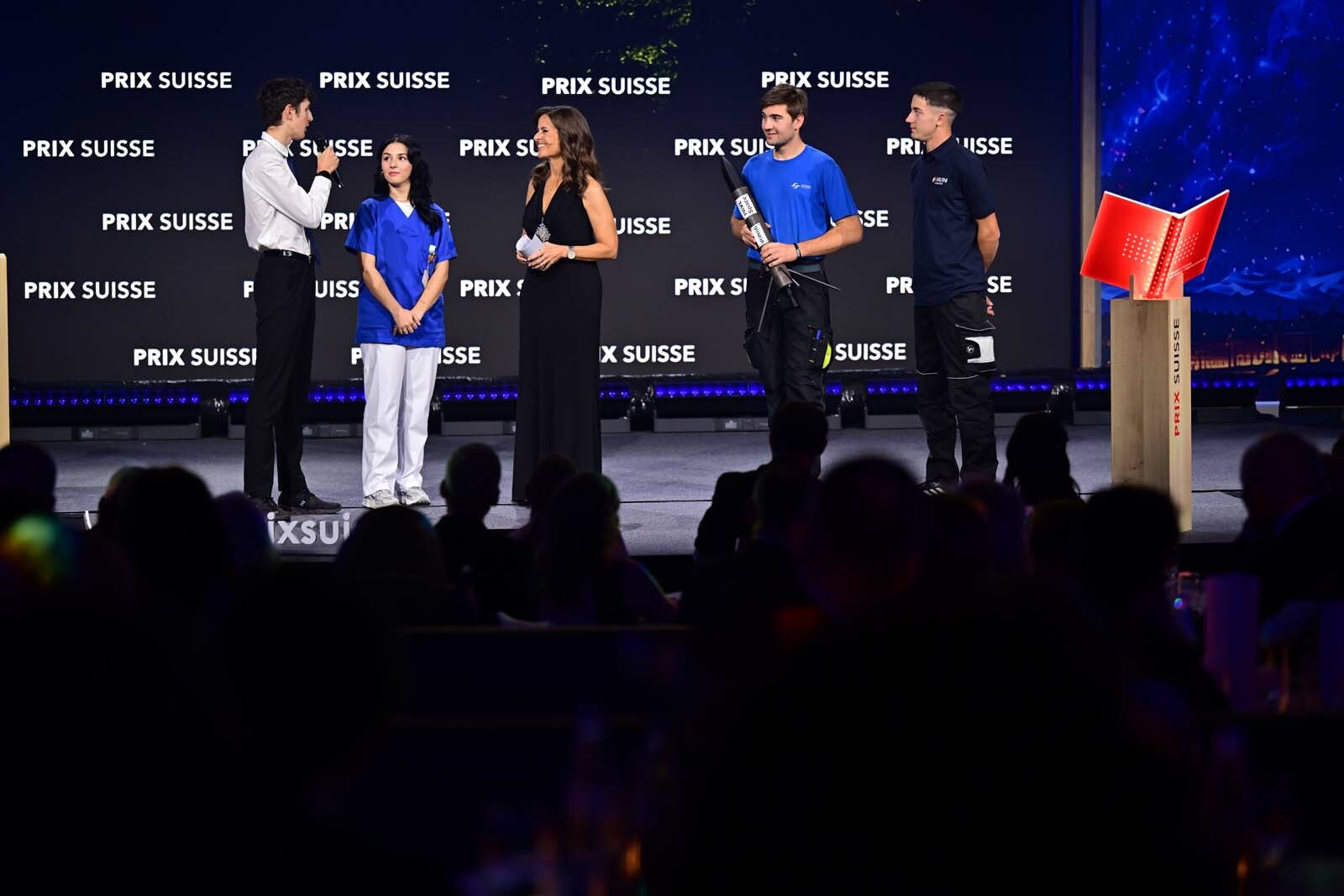
Four young professionals took to the stage to share their experiences of training and their hopes for the future. The evening also showed where mastering a craft can lead. Celebrated chef Tanja Grandits demonstrated the precision and creativity of her work in the kitchen. Artist Saype connected craftsmanship with the stars through his work Bâtir ses rêves on the Chasseral. Singer-songwriter Kings Elliot exemplified the courage it takes to follow one’s own path. Together, their stories underscored the evening’s message that an apprenticeship is a first choice in its own right and a cornerstone of Swiss society.
“Future of Space” – space exploration begins in the workshop
With its focus on the “Future of Space”, the Prix Suisse 2026 turned the spotlight on a sector of growing importance to science, the economy and security in the 21st century. Switzerland has played a part in European space exploration from the outset. It was a founding member of the European Space Agency. A University of Bern experiment measured the solar wind during the first Moon landing in 1969, and Claude Nicollier became the first Swiss astronaut. Today, Swiss universities and small and medium-sized enterprises develop satellites, scientific instruments, high-tech components and new space technologies. This work draws on the expertise of researchers and engineers as well as precision machinists, electronics technicians and other skilled professionals.
Federal Councillor Martin Pfister, head of the Federal Department of Defence, Civil Protection and Sport, also addressed the growing importance of space to national security. Navigation, communications, weather monitoring and early warning systems all rely on satellites.
In response, the Swiss Air Force has established its own space competence centre. The Swiss Armed Forces also train space specialists as part of recruit school.